May 9, 2026. 7:00 AM. Wash hair, dry hair, curl hair, apply makeup, get ready, paint the body. Paint the body? Yes, paint the body. Bikini fitness, a women's bodybuilding division in the IFBB, only active since 2010. My high school dream, realized. Once, for now, and again sometime when life allows it.
Those who have known me for a long time know that I have always loved the gym. I played basketball, swam, played volleyball, and danced. But I loved the gym so much that a friend in high school called me Jana the Gym. High school, 17 years old, me at the gym every day after the second shift, 100kg 1RM on the squat. Chaos.
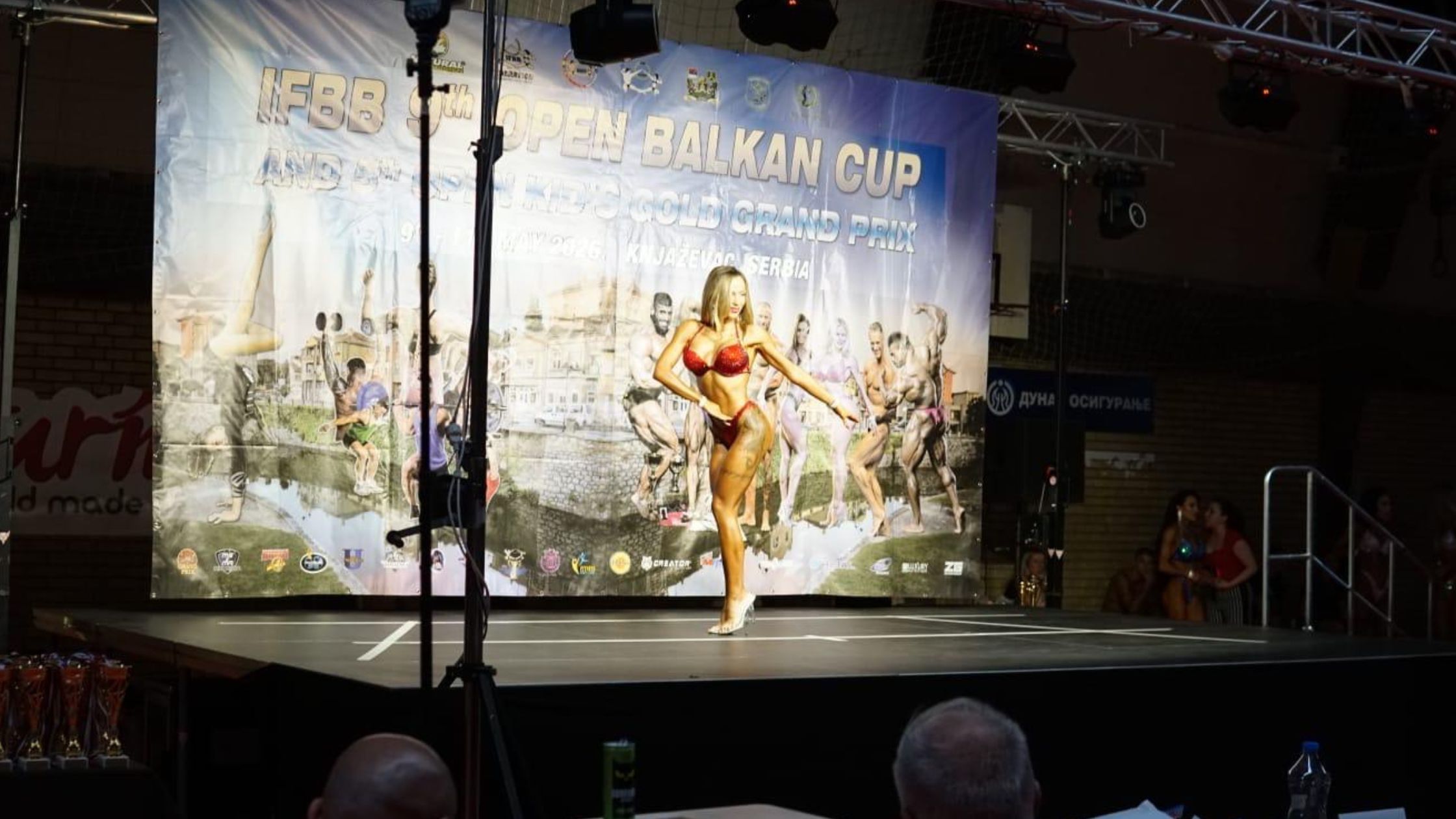
And so, influenced by the internet, I entered the world of women's fitness, mesmerized by the Russian women in the IFBB federation who compete in bikini fitness. 7 years later, here I am, at the Balkan Cup in Kragujevac, a silver medal, Hashimoto's and all.
What do I get out of it? Monetarily, nothing. I have a swimsuit, memories, photos, and everything I learned along the way that I will remember and apply for the rest of my life because it truly means something to anyone struggling with excess weight, let alone someone with Hashimoto's who has more advanced goals.
10 things I learned about Hashimoto's during bodybuilding prep
#1 Diet and training, imagine that, actually help.
The main conclusion from this experience is as follows: in 6 months of preparation leading up to the final fat cut, the inflammation in my body was completely eliminated. Elite nutrition, zero inflammatory foods, elite supplementation.
My period was clockwork, no PMS, no menstrual pain, no problems, no Hashimoto's symptoms. To reach that stage, there were many sacrifices. Training, alongside an anti-inflammatory diet, helps a lot with Hashimoto's because it releases feel-good hormones and improves insulin sensitivity.
So, the only things I didn't sacrifice during prep were myself and my health.
#2 Routine is half the battle.
None of this would have been as good, effective, or possible without a routine. It was set in stone: wake up, Letrox, cardio, breakfast, work, lunch, work, pre-workout meal, training, post-workout meal, work, bedtime meal, work, sleep.
And so every day, like a robot, with all parameters stable, generally very satisfied with myself and my condition, I proved that routine really does matter. If I didn't have a social life, a job to live off of, and places to be, I could do this for the rest of my life.
But giving 100% to one thing will always take away from others, and that catches up with you sooner or later.
#3 Cortisol can destroy in two days what you've been building for two weeks.
This is probably the most painful lesson on the whole list, and the only one I didn't learn from a book, but on my own skin.
Cortisol doesn't distinguish between whether you are in a deficit, whether you had an argument with someone, whether you slept for four hours, or whether you have a work deadline tomorrow. It's all the same to it. The body registers pressure and reacts.
For those of us with Hashimoto's, that response is always a little louder than for others. Two bad days, and everything I thought I had solved comes back. Water retention, a puffy face, the scale staying the same or going up even though my intake is precise to the gram, fatigue that has nothing to do with training, and that feeling as if the inflammation has turned the lights back on somewhere.
And then it takes you two weeks to get it back. Two weeks of sleep, nutrition, discipline, and patience to fix what you ruined over the weekend. The math is devastating, but it's accurate.
That's why, during prep, I started treating stress like a macronutrient. As something to be planned, measured, and controlled. Not instead of, but alongside. Phone down in the evening. Nothing spectacular, but enough so that cortisol doesn't make decisions for me.
If you remember only one thing from this list, let it be this: with Hashimoto's, you don't lose because of one bad meal. You lose because of the stress you allowed to linger. Don't beat yourself up because you had a cheat meal; just continue with your life.
#4 Eliminating inflammatory foods largely resolves disease symptoms.
Let's go back to point #1. It is a fact—scientifically indisputable and practically proven.
And before the preparation, the first thing I started with after the diagnosis was an anti-inflammatory diet. This means the absence of all foods not recommended for Hashimoto's, with a few exceptions that don't bother me personally, which I identified through an autoimmune protocol (more on that in a separate post).
In my free guide, this is one of the things I cover: a brief overview of inflammatory foods and how to gradually identify your intolerances.
Unfortunately, the decision to cut these out needs to be conscious and, to some extent, a lifelong commitment.
#5 Eliminating inflammatory foods and maintaining a routine are pointless if you don't get enough sleep.
Sleep is perhaps the most important factor, alongside cortisol control. Getting 5 hours of sleep and then drinking a liter of coffee to keep yourself going will catch up with you sooner or later. And believe me, I know what a LUXURY it is to get enough sleep when you have too many responsibilities. In bodybuilding, to stay functional despite two workouts a day and hours spent in the kitchen every week, sleep is non-negotiable.
Why? On a Hashimoto's level, it regulates the immune system, thyroid hormones, and blood sugar levels, and lowers inflammation.
On a training level, it heals muscle fibers, aids in protein synthesis, restores glycogen, and provides the strength needed for workouts.
So, if you don't sleep enough, your immunity, hormones, and blood work suffer, inflammation spikes, and muscle soreness doesn't go away—meaning everything else is, more or less, not very sustainable.
And you only truly feel how important sleep is when you're doing everything else right and still not seeing the results you want because that was the missing link.
#6 Extremes are never sustainable.
I have always lived by the 80:20 rule for a sustainable lifestyle and 90:10 for more advanced results. You stick to the plan 80-90% of the time, and the 10-20% you deviate cannot and WILL NOT derail you. However, during competition prep, you have to be at 100%, and that is non-negotiable. Because in prep, 0.1% makes the difference between 1st and 2nd place.
My biggest struggle with this whole story is that this isn't what I do for a living. I am not a coach and I never will be; that simply wasn't my path. I love my job and everything I do, and generally, my career is my priority. During those 6 months, I prioritized my prep, and if we recall what I wrote earlier about how giving 100% in one area means something else has to suffer, that’s where that comes from.
Now, why is an extreme not sustainable? Because it isn't meant to be. If it were sustainable, everyone would live that way. First, it’s stressful for the body in the long run. Second, it’s a lot of sacrifice for someone whose priority in life isn't bodybuilding.
Even for someone who does this for a living, the preparation doesn't take longer than the scheduled period. Accordingly, there are 3 reasons why I wanted to compete, even though I knew I was pushing things to the extreme:
#1 I've dreamed about this since high school, I truly love this sport (especially men's bodybuilding) - and I will compete again someday, when I don't have so many obligations.
#2 I wanted to prove to those of you with Hashimoto's that a normal life isn't a bogeyman if even an extreme goal is achievable, which the vast majority believe is impossible with Hashimoto's.
#3 Out of vanity, because I like to look good, imagine that :D
#7 Supplementation should be a priority in any case.
Every bodybuilder has every possible supplement in their arsenal. Well, not every single one, but the ones that are essential.
Why? Because bodybuilding nutrition is limited, making it impossible to get all the necessary micronutrients from food alone without the body suffering from excessive training and calorie deficits.
To draw a small parallel with Hashimoto's - similarly, due to limited food intake, it is not always possible to achieve optimal micronutrient levels, which is why supplementation is often one of the first topics we encounter upon diagnosis.
For Hashimoto's warriors, a Brazil nut might just be Selenium, but for a bodybuilder, it's "fat, calories, and selenium."
#8 You should always drink enough fluids.
I know, it sounds like advice from the back of a water bottle. But when I first started seriously tracking how much water I drank throughout the day, I realized that for years I had been functioning on half of what I actually needed.
During preparation, water was a mandatory item on my list, just like every meal. Three liters minimum, according to the protocol changes. And the difference was visible in everything: in my digestion, my skin, how I felt during training, and how bloated I was.
With Hashimoto's, a slow metabolism often comes hand-in-hand with slow digestion and constipation, and without enough fluids, it becomes a vicious cycle. Water helps both the liver and kidneys flush out what they need to, and the liver is where a good portion of T4 is converted into T3. So, it's not just "drink water because it's healthy."
One thing I learned along the way: it’s not just about the liters. If you drink a lot of water without getting enough salt and minerals, you’re just flushing it out. The real difference for me was when I stopped being afraid of quality salt in my diet and started paying attention to electrolytes, especially on days when I was sweating through two workouts.
And yes, Letrox should be taken with a full glass of water on an empty stomach, not just two sips on the go. That counts as water, too.
#9 Carbohydrate sources and meal timing are key.
This is the point where it hit me just how many years I had been doing it wrong.
When you get a diagnosis, the first thing you read online is to cut out gluten. Then carbs. Then fruit. Eventually, you end up on a regimen where you’re eating nothing but eggs and broccoli, wondering why you’re always cold, why your hair is falling out, and why you can’t get out of bed. Oh, and you’re not even supposed to eat broccoli.
Carbs are not the enemy. Poor sources of carbs are.
While gluten is a poor source because it’s an inflammatory food, not all carbs are. During my prep, I ate carbs almost every day, according to the protocol. Rice (whole grain), sweet potatoes, fruit. What changed wasn't so much the quantity as the timing. Most of it was consumed around my workouts: a meal before so I had fuel to train, and a meal after to replenish glycogen and help my body recover. The rest was evenly distributed throughout the day, always paired with protein and fats. Never carbs alone.
Why does this matter to us specifically? Because blood sugar spikes and crashes aren't just an energy issue. Every crash is stress on the body, stress means cortisol, and cortisol means everything mentioned in point #3. Plus, the body needs enough carbs for the conversion of T4 to T3 to work properly. Staying on a low-carb diet for too long is one of the fastest shortcuts to feeling worse than you did before you even started.
While keto is a temporary solution due to the absence of many inflammatory foods, it is by no means a long-term one.
So: the question is never whether to eat carbs. The question is which ones, how much, and when.
#10 As long as you have Hashimoto's, incredible things are possible; a normal, average life is absolutely attainable.
This is the point I wanted to make by writing this text.
I didn't get on that stage because I’m some kind of exception. I’m not. I have the same diagnosis you do, the same Letrox in the morning, the same days when it’s hard to get up and everything feels like a struggle.
The difference was that for six months, I consistently did the things on this list, and my body responded.
Let’s be honest: you probably don’t need a stage. You need to wake up without feeling like you’ve been run over. You need your period to come on time. You don’t want your face to be puffy. You want energy for your job, your kids, your life, and yourself. And that is much, much easier than contest prep. Prep is an extreme, and you don’t live in an extreme forever. Your normal life is 80:20, and that is achievable.
If it was possible for me with Hashimoto's to completely remove inflammation from my body in six months and step on stage, then it is possible for you to feel good in your daily life. Not the same struggle. Much easier.
Start with one thing. Not all ten.
And if you don’t know where to start, in my free guide I’ve broken it all down into three weeks, step by step, just the way I wish someone had explained it to me when I first got my diagnosis.
Photo dump:
.jpg)
.jpg)
.jpg)
.jpg)
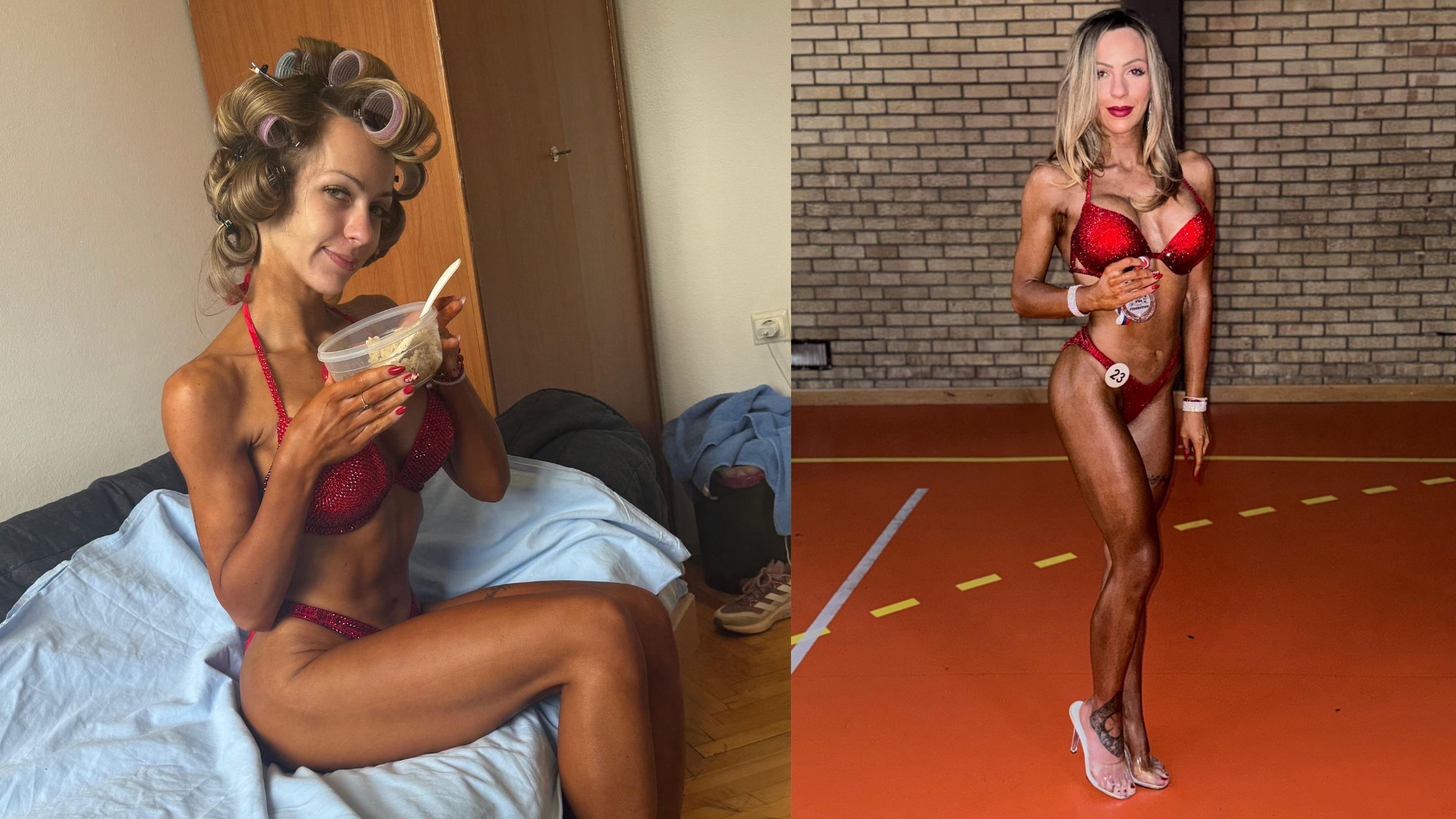
I was shaking like a leaf and couldn't keep a single grain of rice down from nerves that day, but I would do it all over again x10.
IFBB Serbia, until next time.